Disclaimer
Information provided on this website is general in nature and does not constitute financial advice. Every effort has been made to ensure that the information provided is accurate. Individuals must not rely on this information to make a financial or investment decision. Before making any decision, we recommend you consult a financial adviser to take into account your particular investment objectives, financial situation and individual needs.
A FinSec View – Market Updates, US Bank Rate friction, Increasing Insurance premiums, SMSF Tax Target & more….

| 18th July 2025 |
|
|

|
|

|
|


|
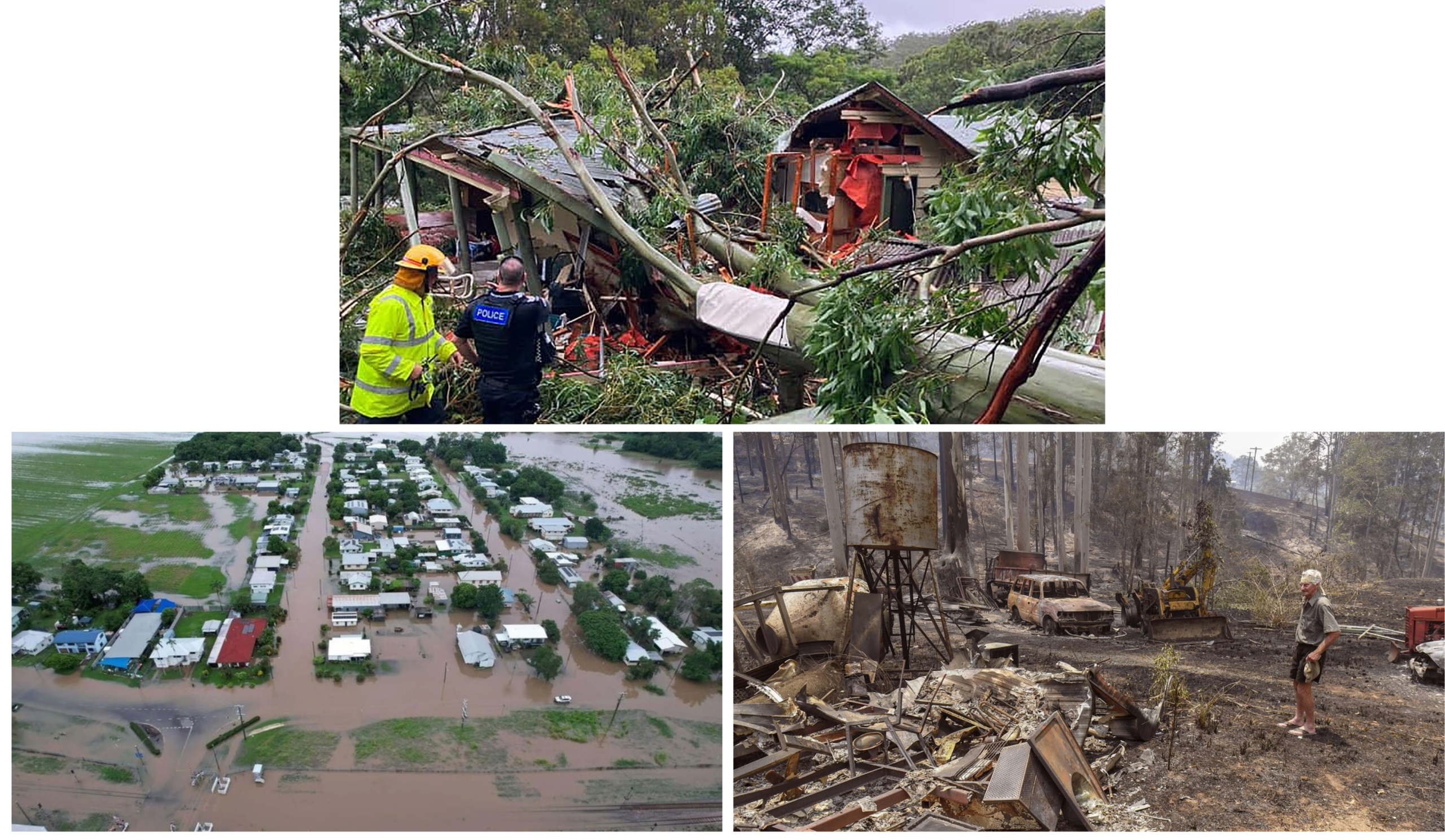
That’s the total insured cost of extreme weather events that have impacted Australia since the start of 2025, according to the Insurance Council of Australia. Recent claims include nearly $200 million from the Mid-North Coast and Hunter Floods, and $274 million from the North Queensland floods. The costliest event was Ex-Tropical Cyclone Alfred, which caused 125,000 claims worth $1.36 billion. Wherever you live in Australia—whether you’re exposed to extreme weather or not— premiums are rising due to the increasing costs of natural disasters, rising asset values, inflation in building and vehicle repair sectors, and higher insurer expenses from government levies and regulations. The Australian Bureau of Statistics reports a 30% increase in insurance costs over two years, outpacing CPI growth. Globally, insured losses from natural disasters have exceeded US$100 billion in six of the past seven years. Major drivers of rising premiums include cyclical factors, such as inflation, which raises repair costs and, consequently, underwriting expenses, as well as structural issues like geographical risks, housing choices, and living standards. Grander, more expensive homes tend to result in larger claims. Settlement patterns and urbanisation contribute to exposure, regardless of the climate change debate. Historically low interest rates through the pandemic also meant that insurers earnt significantly less on monies held in reserve, further undermining profitability. Regulatory demands, including new building standards and taxes like stamp duties and fire levies, further increase costs, often passed to consumers. To keep premiums manageable, insurers rely on economies of scale and efficient supply chains; fragmentation into smaller companies would be counterproductive. Ultimately, government policies sometimes inadvertently reduce affordability or encourage underinsurance. Regularly reviewing policies ensures consumers get the best coverage. Insurance remains essential, but vigilance is key.
Two perspectives on the looming disruption of AI on Australia’s economy and society
As artificial intelligence reshapes global economies, Australia faces the twin challenge of its innovation and disruption. While AI advocates anticipate a jobs boom, cautious voices warn the upheaval may be more profound and quicker than expected. Hamish Douglass, the recently departed, co-founder of global equities firm Magellan, is among those sounding the alarm. He predicts that in 5-10 years, up to 50-70% of high-paying professional jobs in sectors such as advertising, law, consulting, accounting, and fund management could disappear, replaced by machines that perform analytical tasks more efficiently and cost-effectively than humans. The ripple effects, Douglass argues, could be significant, leading to surging welfare claims, declining tax revenues, and spiralling budget deficits as white-collar workers face obsolescence alongside blue-collar workers. “Now is the most exciting and the most frightening time to be an investor in my lifetime,” Douglass recently told The Australian. “You may have half the index virtually collapse by 50, 60 or 70 per cent in share price in the next five to 10 years because businesses are so disrupted.” However, Australia’s history also offers hope, says Kos Samaras from leading polling firm Redbridge. When globalisation threatened manufacturing jobs in the late 20th century, Hawke and Keating, according to Samaras, managed the transition with strategic economic reforms and strong social investments—universal healthcare, education, and a solid safety net—that maintained social cohesion even as industries shifted. The AI revolution, however, challenges the core of the knowledge economy, risking not only routine jobs but also professional and creative roles that once appeared safe. This changing landscape calls for a balanced approach. On one hand, there are opportunities: AI can unlock new efficiencies, drive productivity, and create entirely new sectors. On the other hand, as Douglass warns, unchecked disruption could erode consumer demand: “As you accelerate this over time, businesses you think are wonderful today, you start saying to yourself, ‘what happens if the customers don’ t have the money?’” He cites examples such as luxury goods retailers and hotel chains that rely on a white-collar clientele that may become non-existent. Even tradespeople aren’t immune, as their livelihoods depend on the spending power of others. To navigate these challenges, Samaras says Australia must draw on its reformist heritage. Strong government leadership is essential: investing in retraining, modifying education to encourage creativity and resilience, and supporting industries less vulnerable to automation, like healthcare and green infrastructure. Regulatory oversight and tax reforms may be necessary to ensure that the benefits of AI are shared widely, rather than concentrated in a handful of firms. Douglass’s advice to investors is clear: position yourself for the medium term, stay vigilant for signs of disruption, and remember that even today’s market favourites can become tomorrow’s Kodaks. For the country overall, says Samaras, the challenge will be to harness AI’s potential without leaving entire communities behind—a test not just of technological skill, but of social foresight and political resolve. In the next decade, how Australia reacts to the rise of AI could shape its economic resilience and social fabric for generations. Why SMSFs are becoming a bigger tax target
A recent analysis of Australia’s Self-Managed Super Funds (SMSFs) has shown that their portfolio performance has matched, if not surpassed, larger industry and retail funds that dominate the country’s $4.2 trillion super sector. Unfortunately, the findings by Tim Toohey, of Melbourne’s Yarra Capital Management, will only increase the tax trepidation being felt by the 1.2 million Australians who have SMSFs and will bear the brunt of the looming $3 million super tax. Toohey’ s examination questioned how SMSFs, despite typically having more conservative investment strategies, managed to achieve comparable if not superior returns to the big super players. SMSFs have just 3% of their assets invested overseas, compared to 38% among large funds, which have enjoyed substantial gains in recent years. SMSFs hold about 16% of their assets in cash, compared to just 9% by larger funds. Such cautious allocations would typically suggest lower returns, yet SMSFs have still kept pace. SMSFs’ net assets grew by 38%, reaching $981 billion between 2020 and 2024, the same for large super funds. Only 3% of SMSF members are under 35, compared to 26% in large funds, so it’s not about attracting younger members. While rollovers from other funds have been high for SMSFs, they account for just 2% of their total asset growth over the past four years.
So, what’s Toohey’s likely explanation? Tax. Australia’ s unique zero-tax pension phase plays a key role; with 52% of SMSF members over 60, compared to 34% in large super funds, Toohey estimates that the higher proportion of SMSF members in the pension phase explains about half of the 11% difference in investment returns and asset growth. “ The generosity of a zero-tax pension phase is an arrangement that is a uniquely Australian construct and, given higher income households tend to have larger super balances, it is also clearly regressive,” Toohey notes. Furthermore, 6% of SMSF assets are in residential property, enabling strategies like negative gearing that big super funds can’t access. Other tax-effective strategies, such as using special investment vehicles, further distinguish SMSFs from large funds. The fact that SMSFs are overweight in Australian shares (27% of assets, compared to 22% in large super funds) provides another significant tax benefit. By targeting franked dividends — taxed at a rate significantly lower than the corporate rate — Toohey says SMSFs can enjoy substantial benefits that compound over time. Are SMSF members better investors? Not necessarily. Similar benefits can be attained in “wrap account” type administration platforms (although real property is SMSF specific). Asset allocation and investment returns are similar to large super funds, but SMSF members tend to be older and more tax-savvy, Toohey explains. Toohey’s findings are likely to reinforce the siege mentality being felt by SMSFs, already feeling like a tax target, particularly from federal Treasurer Jim Chalmers, who remains committed to introducing his controversial tax on unrealised gains for super funds holding more than $3 million in assets – a move that will hit SMSFs the hardest. Will Chalmers next focus on the tax advantages enjoyed by the super sector broadly, particularly targeting SMSFs? Yes, according to Toohey, although he’s unsure yet what these changes might look like. Rightly or wrongly, governments struggling to fund significant spending commitments—healthcare, aged care, the NDIS, defence—and manage budget deficits will continue to target super tax concessions as a potential revenue source. Rest assured, at FinSec Partners we are monitoring developments very closely and will be pro-actively ensuring clients likely to be affected by any changes are positioned to minimise any impact. What price loyalty??As discussed above, the Reserve Bank is clearly still concerned about inflation rearing its head again, particularly off the back of Trumps tariffs flowing through the economy but also as a result of there being no respite in government spending. Their decision to keep rates on hold was bold and highlights the importance an independent RBA. Michelle Bullock’s messaging was clear. The rate trajectory is down, we just need to be sure that the inflation genie is back in the bottle and the lid is sealed. Many mortgage holders will be feeling let down by this decision. A 25bp cut would deliver the average mortgage holder in Adelaide a saving of $110 per month. Our experience is that mortgage lenders tend to let rates creep up for existing clients to “pad out” their interest margin whilst offering lower rates to new borrowers. The average rate being paid for existing owner occupiers is currently 6%pa however, most new borrowers are being offered rates around 5.50%pa. That is a difference of $2500 per annum in after tax dollars. Finsec Partners have recently appointed a new mortgage broker Anthony Hughes, to assist clients and their families achieve the best possible outcome for borrowers. Our lending service will help identify whether your lender is delivering a competitive rate or whether it’s time to shop around. Changes to the Finsec TeamAt the end of the financial year, we said goodbye to some FinSec Stalwarts. Advisors Michelle Rowley, Russell Pratt and Brenton Moyle all retired after 30 year careers in financial services. They will be sadly missed and we wish to acknowledge their amazing contribution to FinSec and their clients over recent years and wish them well as they embark on their next chapters. As one chapter closes another one opens. We are delighted to welcome new advisors Renay Richardson, Matt Izzo and as mentioned above, Anthony Hughes, who have joined the FinSec team to ensure we are resourced to deliver the same high quality advice and client centric service you have come to expect from the team. |




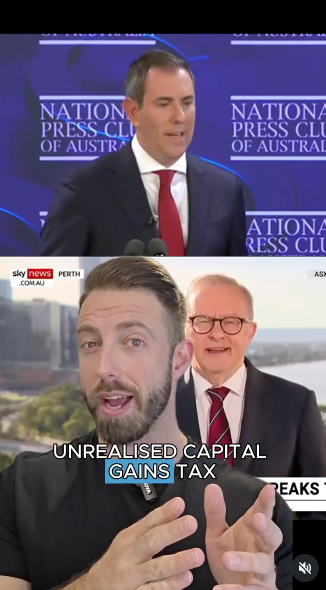
Friday FunnyThis clever video completely unravels the Federal Government’ s plan to tax unrealised gains of Australians with more than $3 million of assets in their super funds. If only the tax impacts – especially on farmers, small business owners and self-funded retirees – could be so easily laughed off. Click here to download the video file.
|